Archive

Archive for the ‘Travel’ Category

Weekend in Istanbul (Part II)

October 20th, 2011 9 comments

Earlier, I shared Part I of our weekend in Istanbul: Where we stayed, What we visited & What we ate.

Here’s more about that trip.

Where We Shopped

I wanted to buy something not available in Dubai, and I was set on Cukurcuma, the antique district in Beyoglu. Unfortunately, we had trouble finding the area. (Later, I discovered we were so close but had missed it!) The next day was Sunday and many shops were closed, and some streets were closed due to the Istanbul City Marathon. Alas, antique-shopping was not meant to be.

We settled on the Grand Bazaar, a famous and colorful souk, a sprawling labyrinth of over 4,000 shops. Here we found the usual Middle Eastern  handicrafts, carpets and kilims, pottery, jewelry, leather and more. There were even some antiques, but none called out to me.


I’ve been to other souks in Arab cities, and the Grand Bazaar reminded me most of the Muslim Quarter in the Old City of Jerusalem. However, the Grand Bazaar felt much bigger—downright overwhelming. It seemed to go on forever. I was buying things left and right because I was afraid I would never find that shop again. We entered at one gate, wandered, shopped and browsed for several hours, then left from another gate, exhausted and unsure of where we were.


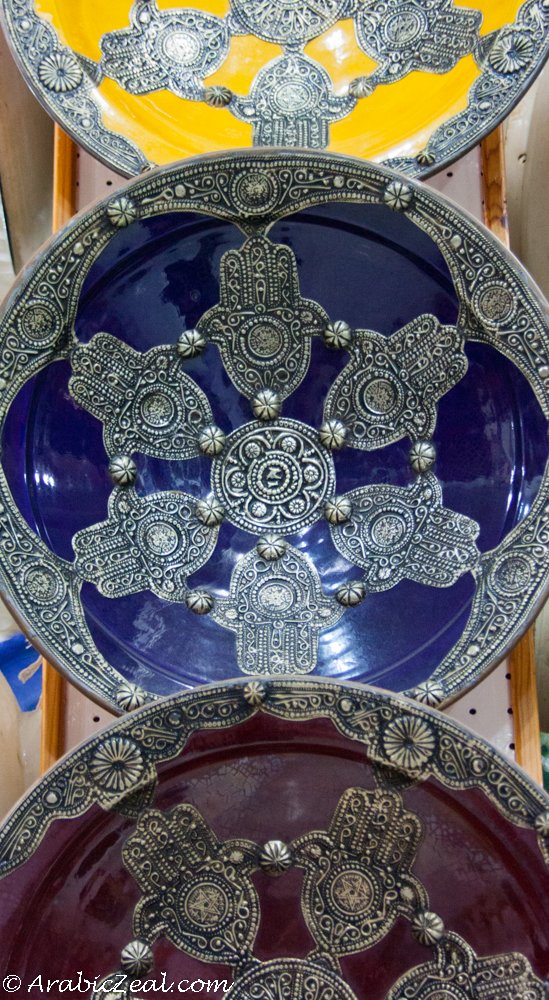
This bazaar was the one place that felt Middle Eastern to me. The bargaining was intense. We had to go back and forth, back and forth, just to agree on the right price for one teapot. Here are a few things we saw in the Grand Bazaar. Lots of pottery.

Whirling dervishes.

More whirling dervishes. 

And pomegranates, too.

There were many beautiful things that I didn’t take photos of. Actually, I didn’t linger at any shop unless I planned to buy something because the shopkeepers were quite aggressive.

Where We Went

We also went to Istiklal Caddesi, a bustling pedestrian boulevard in Beyoglu, and near our hotel. We went twice; both times it was raining. Still, it was the weekend, and the promenade was filled with locals strolling under umbrellas.


This promenade was in sharp contrast to the bazaar. We found modern restaurants, boutiques, cafes and businesses like Starbucks, Nike and The Gap. This was the place to see the young people, who struck me as stylish and hip, and above all, European.

And the architecture was European, too. So quaint compared to Dubai. Here was one of many cute buildings.

The avenue had a streetcar running from one end to the other.


I noticed that shops were grouped according to type–jewelry shops, music stores, lighting boutiques, etc. There were lots of charming side streets. Off one of them was the antique area that we never found.

As always, we gravitated to Starbucks. I like to visit Starbucks in various countries. For me, it’s not globalization, but a little piece of home. As we sat by the window, keeping warm and watching people enter and shake raindrops off their umbrellas, I almost felt like I was in Seattle.

Meanwhile, I saw so few women wearing hijab, I was thinking that one sees more women in headscarf in Seattle than in this part of Istanbul.

Below are some of the more Turkish sights of Istiklal Street.

Coming up next: Part III: What we saw, What we bought, What surprised me & What I thought

Question: What is your favorite area of Istanbul?


Weekend in Istanbul (Part I)

October 19th, 2011 7 comments

When my husband invited me to spend the weekend with him in Istanbul, I immediately said, “Sure!” I’ve visited nine Arab countries, and  I assumed the city would be another variation of the same Arabic theme.

I was wrong.

Istanbul was something else entirely. Here is a summary of our weekend:

Where We Stayed

We stayed in the Ritz-Carlton, Istanbul, located off Taksim Square with views of the Bosporus. We had a lovely suite with a Turkish-inspired décor. Below was the view from the hotel. Coming from Dubai, I appreciated how green and lush Istanbul was.


What We Visited

Because Istanbul is so mind-boggling rich with cultural and historically sites, it seemed an injustice to be there for just two days. But I knew what I wanted to see: the Blue Mosque for starters, an Istanbul icon, and even more, I had to see Aya Sofya (Hagia Sofia), which was first a church, then a mosque, and now a museum—its unique story I had studied in university Art History.

These two structures are both found in Old Istanbul, conveniently and interestingly located right across from each other. Sultan Ahmet I (1603-17) deliberately built the Blue Mosque to rival and surpass the Aya Sofya, just across the street.

The morning we visited the Blue Mosque was wet, cold and rainy. Still, there were throngs of tourists swarming all around and waiting to enter. (Apparently most of these tourists came off of several cruise ships that were in the harbor.) Below is the exterior of the Blue Mosque.


The layout of the Blue Mosque is classic Ottoman design, with an ablution fountain in the center of the courtyard.


 We waited under these intricate archways in a long line of visitors, all waiting to get of glimpse of the interior.

The “blue” of the Blue Mosque comes from the Iznik tiles that line the inside walls and dome.


Next we visited the Aya Sofya. Initially built as a church in the 4th century, it served for a thousand years as the greatest church in Christendom. That is, until Mehmet the Conqueror turned it into a mosque. It remained a mosque for 500 years until Ataturk proclaimed it a museum in 1935 (part of his many reforms to make Turkey more modern, secular and Westernized). Below is the exterior  of the Aya Sofya.


Apparently the Aya Sofya represents one of the finest examples Byzantine architecture, but what I found fascinating and refreshing were the symbols of Christianity and Islam right alongside each other.

Here is a detail of the Madonna and Child mosaic:


What We Ate & Drank

I knew the food would be good. My husband has been to Turkey almost forty times, so he knew what to order. We enjoyed fresh figs and Turkish sesame bread and yummy Turkish cheeses and yogurt. We ate fish, lots of fish—sole, sea bass, red snapper, and bluefish. Of course, we had Turkish delight. It was served in the lobby so we had a sample every time we breezed past.

We had Turkish coffee. (Gotta love the presentation!)

And Turkish tea.

Even lavender tea. This was at a lovely waterside restaurant called the Assk Cafe, located right on the Bosporus, recommended by my Turkish friend.

We tried Turkish kunafe, which is similar to the Arabic pastry, but crispier and served with ice cream on top.

We had coffee each morning, thanks to the cute automatic espresso maker in our room. I got really attached to this machine.

We were surprised to find a complementary birthday cake for my husband in our room. (I’m sad to say the hotel was better about remembering his birthday than I was…)  Anyway, the cake was coffee-flavored and perfect.

Naturally we had to have Afternoon Tea at the Ritz, one of my favorite meals anywhere, this time with a Turkish twist.

Coming up Next:

Part II: Where we shopped & Where we went

Part III: What we saw, What Surprised Me, What I Bought & What I Thought

Mecca & Medina without a Map

May 3rd, 2011 8 comments

When we got our visas for Saudi Arabia, the first thing I did was grab my Lonely Planet Guide to the Arabian Peninsula. I turned to the chapter on Saudi Arabia—seventy-five pages describing the cities and regions of Saudi. But wait!

There was no mention of Mecca or Medina. How had I missed it? I turned the pages one by one, flipping past maps of Riyadh, Jeddah, Dammam, and Al-Khobar. Aside from one line about Hajj visas, there was no word about Mecca or Medina.

The Mystique

Of course, entry to Mecca and Medina is permitted to Muslims only. The holy cities are so inaccessible that even Lonely Planet didn’t dare write about them. (Don’t they have Muslim travel writers? Don’t they realize they have Muslim readers?)

All of this secrecy only increased mystique surrounding Saudi Arabia, reinforcing in my mind the notion of the “last forbidden kingdom.” My imagination grew. I pictured myself in the abaya and shayla I would be required to wear. I wondered if I would have a run-in with the infamous mutawwa, the Saudi religious police. Always the curious traveler, I secretly hoped I would.

Déjà vu
 
Despite the mystery, my overall impression of Saudi was one of familiarity. The streets of Mecca reminded me places in the UAE: Al-Ain and Ras al-Khaimah. The landscape around Medina reminded me of Fujairah and the way to the Atlas Mountains in Morocco. But above all, Medina made me think of Jordan. Sometimes I had to remind myself that I was in Saudi, not Jordan. This was partly because our hotel was filled with busloads of Jordanian pilgrims.
There were surprises, too. We had a series of friendly, chatty Saudi taxi drivers who asked if we were enjoying our trip. They performed the role of tour guide and shattered any stereotype I may have had about Saudi men. One driver told me, “I like the American people. I like your President Obama.”

Another driver felt the need to tell me, “I hate Osama bin Laden. All Saudis hate Osama bin Laden.”  Good to know.

We spent most of our time in the holy city of Medina, a sleepy getaway town. According to the hotel brochure—as I had no guide or map of the city—the list of “significant sights” was a list of mosques—the Prophet’s Mosque, the first mosque in Islam, and seven mosques for the seven companions of the Prophet. (Peace be upon them all.)

In the days that I spent there, I did not encounter the “rich oil country” that Saudi Arabia is known as. The Saudi that I saw was more underprivileged and run-down that I had expected. (Granted, coming from Dubai, even Seattle and Paris look run down to me.) I did, however, get a few glimpses of upscale neighborhoods.

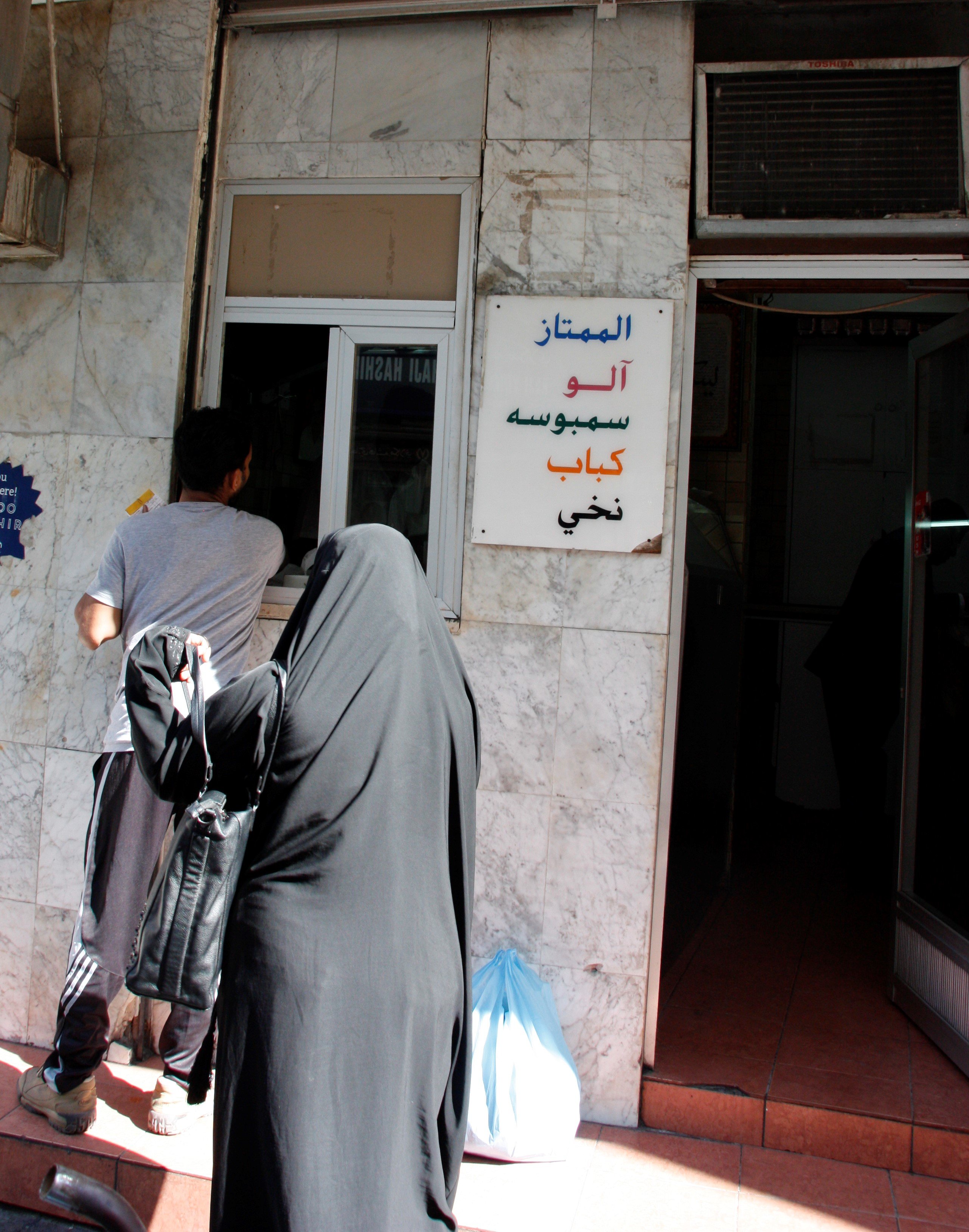
The Saudi women were more modest and less flashy than their Emirati counterparts. Along with the black abaya and shayla, many wore niqab. At first glance, they all looked the same. But if you steal a second look, the variations appear. One wears sandals, one spiky heels, another wears Converse All-Stars.

In a Medina Starbucks, the Arab woman at the next table declared that I was a “beautiful woman.” This was particularly uplifting as I was feeling old and invisible in my black shayla. I wanted to tell her, “And you, too!” but it felt insincere, as I could not see her face, only her eyes peeking out from behind her niqab.

Saudi was not as strictly segregated as I had imagined. There was plenty of interaction between men and women. Saudi women needed to talk to men to order their cappuccino, buy clothing or do any kind of shopping. Everywhere I looked was a Saudi woman speaking to a man that was not her relative. Shocking!

Of course, Saudi Arabia does have its own wacky weird unusual qualities.

Unique Aspects to Saudi

  • I bought a TIME magazine, and later, I discovered the pages I wanted to read had been ripped out! (I much prefered the Emirati censors who merely black out offending images, but don’t rip out the whole page.)
  • Restaurants and cafés typically have two sections: Single men and Families. My husband and I spent a lot of time in the “Families Section” of Starbucks, where screens provided privacy to us caffeine-addicts. I also noted Starbucks’ trademark naked-mermaid logo was conspicuously absent from the signage.

  • Dressing rooms were non-existent. In the mall, I took a stack of clothing from the shop (based on the honor system apparently) and walked to the nearest restroom to try them on. Perhaps the idea of a woman undressing in a shop was too provocative.
  • However, sexy lingerie stores were not a problem. Just like in Dubai, they were all over. But in Saudi, women’s teddies and thongs are famously sold by men. According to one of our talkative drivers, the country had recently tried to employ women in these shops, but that attempt had failed—I’m not sure why.
  • Regarding Saudi hours of business, shops didn’t simply close for various prayers. They closed all afternoon as well. Restaurants closed a full hour before prayer time to make sure everyone was out on time. This meant that businesses were closed more often than not—a frustrating fact for a visitor.
  • Supposedly, the abaya and shayla were required by law when in fact I saw women from various countries wearing their own cultural form of Islamic dress—jilbab, dishdash, sharlwar kameez. The point was to be modest by Islamic standards. It was an interesting experiment to wear hijab for five days. I become temporarily fixated on pins, drape, and hijab styles. I discovered I preferred the long shayla over a square scarf, but in the end, I was content to return to Dubai, where there is no such requirement.

  • Women often have their own lines. I saw this as the positive side of segregation. For example, the women’s line in the airport was always shorter!
  • On our last day, we were at the Jeddah airport riding a bus to the tarmac on our way out. A man indicated to me that I had a strand of hair showing. I shoved the hair under my scarf, feeling utterly annoyed. Then I realized. Maybe I had encountered the mutawwa after all! Only then was my trip to Saudi complete.

Please share your impressions of Saudi Arabia.